
















Development history and function of trolley
Release time:
2014-03-19
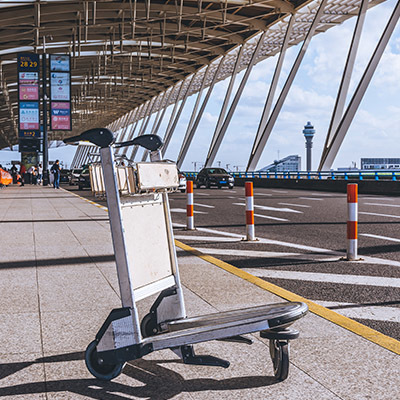
A cart (wheelbarrow;barrow;handtruck) a handling vehicle pushed and pulled by human force. It is the ancestor of all vehicles. Although trolley material handling technology continues to develop, trolleys are still used as indispensable handling tools, such as airport luggage trolleys and cargo trolleys. Trolleys are widely used in production and life because of their low cost, simple maintenance, convenient operation, light weight, can work in places where motor vehicles are inconvenient to use, and is very convenient for carrying lighter items at short distances. There are single wheel, two wheel, three wheel and four wheel. Alone
A hand truck (wheel barrow;barrow;hand truck) that is pushed and pulled by human force. It is the ancestor of all vehicles. Although trolley material handling technology continues to develop, trolleys are still used as indispensable handling tools, such as airport luggage trolleys and cargo trolleys. Trolleys are widely used in production and life because of their low cost, simple maintenance, convenient operation, light weight, can work in places where motor vehicles are inconvenient to use, and is very convenient for carrying lighter items at short distances. There are single wheel, two wheel, three wheel and four wheel. The wheelbarrow can travel on narrow springboards, footbridges and small lanes, and is able to turn in situ and dump goods conveniently. Commonly used two-wheeled vehicles include hand-propelled trucks for carrying items, rack trucks and hopper trucks for carrying bulk materials. There is one in the three-wheeled cart and two swivel casters that can rotate around the vertical axis in the four-wheeled cart. This kind of swivel caster can automatically adjust to the direction of minimum running resistance with the change of vehicle movement direction in operation.
A moving vehicle pushed and pulled by human force. It is the ancestor of all vehicles. Despite the continuous development of material handling technology, trolleys are still used as indispensable handling tools. Cart is widely used in production and life because of its low cost, simple maintenance, convenient operation, light weight, can work in places where motor vehicles are inconvenient to use, and in airports, it is very convenient to carry lighter items at short distances. There are single wheel, two wheel, three wheel and four wheel. The wheelbarrow can be driven on narrow springboards, footbridges and sheep's intestines, and can be turned in situ for easy dumping. Commonly used two-wheeled vehicles include hand-propelled trucks for carrying items, rack trucks and hopper trucks for carrying bulk materials. There is one in the three-wheeled cart and two swivel casters that can rotate around the vertical axis in the four-wheeled cart. This kind of swivel caster can automatically adjust to the direction of minimum running resistance with the change of vehicle movement direction in operation.
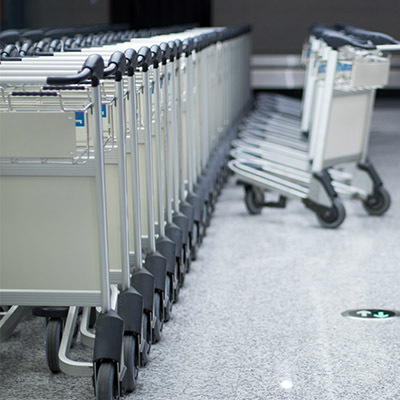
Trolley. Trolleys for different purposes have different body structures. Most of the universal four-wheeled trolleys have a cargo platform. Special airport luggage trolleys have various structures. Some car bodies are made into box shapes, which are suitable for handling light-weight and easy-to-load articles. Some car bodies extend out of brackets to facilitate the placement of rods, shafts, pipes and other parts. Some car bodies are completely consistent with the goods, such as gas cylinder carts. Some are very small and can be folded and carried. Some are easy to load and unload cylindrical goods such as bottled liquid and paper rolls, there are two flat steel bars on the car body to form a low slope to facilitate the rolling up and down of cylindrical objects, such as cylindrical cargo loading and unloading trucks. Modern trolleys are equipped with rolling bearings, wheels with solid tires or pneumatic tires.
Recommended Content
CONTACT US
Add:D-08,Huading Industrial Park,Wuhan Economic and Technological Development Zone (Hannan), Wuhan City, Hubei Province, China
WECHAT PUBLIC ACCOUNT
Mobile website QR code

FEEDBACK
Copyright©2023 CartTec (Wuhan) Airport Solutions & Service Co., Ltd
Powered by 300.cn · IPv6 access is supported
SAF Coolest v1.3 设置面板 INRSX-ZNOF-PWADE-ASA
无数据提示
Sorry, the current column has no content for the time being.!
You can view other columns or returnHome Page