














Airport luggage trolley introduces you to the king of trolleys
Release time:
2014-04-21
In November 2012, at the China Retail Leaders Summit and Chain Store Exhibition, Lan Ke (EricLamballe), the world's largest shopping trolley manufacturer and general manager of Wangzhong Commercial Equipment (Shanghai) Co., Ltd., met an interesting visitor. "I made an identical car for you." He pointed to a Wangzhong supermarket trolley said. "But it's easy to roll over. If you don't roll over this one, there must be a secret!" "Of course, this is my secret." Lan Ke said, two people will smile. At first glance, this 22-litre children's supermarket trolley is not out of the ordinary. Car height 67cm, color
In November 2012, at the China Retail Leaders Summit and Chain Store Exhibition, Lan Ke (Eric Lamballe), general manager of Wangzhong Commercial Equipment (Shanghai) Co., Ltd., the world's largest shopping trolley manufacturer, met an interesting visitor. "I made an identical car for you." He pointed to a Wangzhong supermarket trolley said. "But it's easy to roll over. If you don't roll over this one, there must be a secret!" "Of course, this is my secret." Lan Ke said, two people will smile.
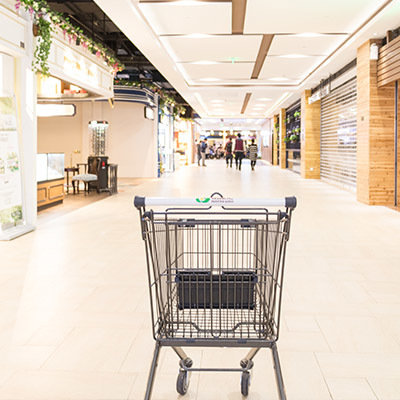
At first glance, this 22-litre children's supermarket trolley is not out of the ordinary. Car height 67cm, color spray body. What can be called the highlight is that the handle on the flagpole can facilitate parents to help their children control the direction of the cart and brake in time. But don't rush to conclusions, Wangzhong shopping cart contains more than 100 technology and process patents and more than half a century of manufacturing experience. That includes the "secret".
In fact, in 1918, Rudolf Wanzl, the founder of Wangzhong, opened a locksmith shop in the town of Giebau, Sudetenland, Czechoslovakia, and the business gradually expanded to scale manufacturing and agricultural machinery sales. After World War II, shopping baskets and shopping carts made by Wangzhong were used in the first self-service pilot project in Augsburg, Bavaria, and gradually gained reputation and orders, and almost the entire village became Wangzhong employees.
In 1998, it established a subsidiary in China. After three generations of operation, the company has established 11 factories in 7 countries around the world and has more than 4000 employees, 2400 of whom are in Germany. In 2007, on the 60th anniversary of Wangzhong, it has produced and sold 2 million shopping trolleys of various models, becoming the world's largest shopping trolley manufacturer.
This also gives Wangzhong the ability to break the traditional business mindset-price is not the main factor in determining sales. Li Qi, the national sales manager of Wangzhong China, told Global Entrepreneur, "Fifteen years ago, the price of the trolley imported from the German Wangzhong supermarket chain in Shanxi Meite was 3600 yuan per car. The executive president Li Haibin was very impressed by this."
Indeed it is. Although Wangzhong has been made in China for 13 years, its trolley price is still more expensive on the market. Searching for "trolleys" on Alibaba, you can see a huge price difference from tens of yuan to thousands of yuan. However, this does not affect their sales. In 2012, the global sales of Wangzhong were about 0.527 billion euros. Among them, the proportion of trolleys is about 80%. If calculated according to the average value created by employees, based on Wangzhong's sales of 0.44 billion euros in 2011, it is almost comparable to the performance of Japan YKK Group, the global "zipper champion" manufacturer, in 4.08 billion euros in 2011. The latter has 39000 employees.
"In the world, our market share is about 50%, which is the same as in our Chinese market." Lan Ke told Global Entrepreneur at Wangzhong China's factory in Songjiang, Shanghai. He said that the remaining half of the market has not bred a strong opponent, almost all from small factories. This statement was verified by Wu Fei, director-general of the Commercial Facilities and Equipment Committee of the China Chain Store & Franchise Association, who is familiar with this industry. "The remaining 50% belong to very small-scale manufacturers," Wu Fei told Global Entrepreneur. There are many family workshops in Changshu, Jiangsu, specializing in the production of commercial equipment for supermarket chains. "Price is their only advantage."
Unfortunately, that is the problem. Wangzhong has registered more than 100 patented technologies in the German market, and it has only registered more than 20 patents in China. This is not because it is expensive, but because the more patents are registered, the faster the trend of plagiarism will come. The sources of raw materials such as steel wire, plastic spraying powder of Tiger brand and PP plastic are completely transparent, and the registered patented technology is also closely watched by peers. As soon as Wangzhong's new cart goes on the market, it faces the fate of being dismembered by some small factories. And some stores even directly take pictures of Wangzhong carts to place orders with some small factories.
There is no doubt that Wangzhong has encountered many common troubles of multinational enterprises in the Chinese market. But that doesn't stop the German "small and beautiful" company from finding a suitable place in the jungle of Chinese manufacturing. The good news is that in 2012, Wangzhong sold 200000 trolleys in China. Of course, this is not the actual production volume of Wangzhong's Chinese factories, which cover almost all of Wangzhong's Asian markets. As of 2011, Wangzhong has contributed more than 2.8 million trolleys to the world.
unexpected harvest
"This is a strange market segment. We are both B2B and B2C enterprises." Blue Ke said. On the other hand, if there is no B2C factor hidden in this format, the trolley, a product with a low bid, is unlikely to defeat other equipment such as shelves, pallets, freezers, etc. and become an invisible star product in the store. "In the store, the only equipment consumers need directly is the trolley, which is part of the store service experience." Li Qi said.
This experience also allowed them to successfully open the Chinese market. The first batch of enterprises in mainland China to introduce fresh agricultural products into modern supermarket circulation is famous for its wide variety of seafood products and affordable prices. But four years ago, they found that their shelves and trolleys were prone to rust, affecting the supermarket's manual maintenance costs and consumer shopping experience. The reason is that seawater is more corrosive and easily leads to rust.
Obviously, the material of the trolley must be changed. But this is undoubtedly a technological innovation in the trolley industry. After more than half a century of development, the cart material has not changed much. In view of this, Wangzhong first took fresh water samples from the supermarket store and sent them to the German headquarters for component testing, and conducted environmental simulation experiments on corrosion-resistant materials required for fresh food. After various tests, they believe that stainless steel is the most suitable raw material.
The new problem is that stainless steel is not an accurate answer. Because there are too many types of stainless steel, and what they need is the two elements contained in stainless steel, namely chromium (Cr) and nickel (Ni). The addition of chromium to steel can significantly improve the oxidation resistance of steel, and can improve the strength and wear resistance of steel. The effect of nickel is to improve the rust resistance of steel, and has a high corrosion resistance to acid, alkali and seawater. However, these two elements are scarce in China and even in the world, so the price of raw materials has become a priority.
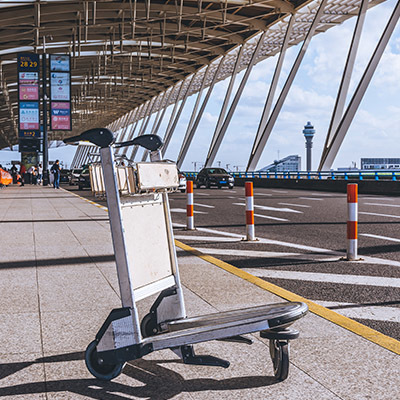
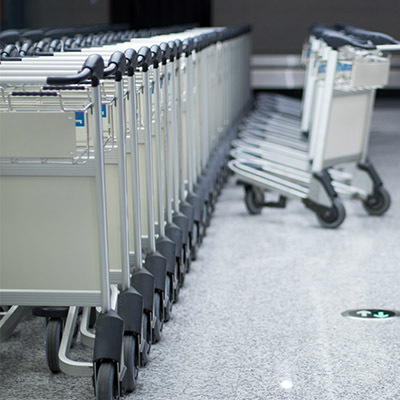
Cost reduction means painstaking repeated testing and comparison, and Wangzhong finally selected the austenitic stainless steel SUS304 from Japan. The corrosion resistance of this model can meet the requirements of fresh food in supermarkets, and the practicality and economy can also achieve an effective balance. Although everything is ready, but out of the laboratory to achieve mass production also need to face a comprehensive and accurate transformation of the process. (Airport Luggage Trolley)
The good news is that after the sample came out, Wangzhong China airlifted it to its German headquarters for testing, and the results were highly recognized. After that, the first batch of 200 sample cars were put into the supermarket model store at the end of 2009. After more than a year of tracking tests, the surface of the trolley body is as bright as new. At this point, the problem of seawater corrosion has finally been effectively solved. "The consumers of this supermarket became the first in the world to use all-stainless steel trolleys. They didn't know it." Blue Ke said.
Recommended Content
CONTACT US
Add:D-08,Huading Industrial Park,Wuhan Economic and Technological Development Zone (Hannan), Wuhan City, Hubei Province, China
WECHAT PUBLIC ACCOUNT
Mobile website QR code

FEEDBACK
Copyright©2023 CartTec (Wuhan) Airport Solutions & Service Co., Ltd
Powered by 300.cn · IPv6 access is supported
SAF Coolest v1.3 设置面板 INRSX-ZNOF-PWADE-ASA
无数据提示
Sorry, the current column has no content for the time being.!
You can view other columns or returnHome Page